Checking vs. Savings Accounts for Teens: Which One Actually Fits?
Last updated: August 10, 2026
- For example, a $300 monthly paycheck with $120 in regular spending points toward checking.
- A $200 birthday deposit meant for a $1,000 purchase points toward savings.
- A $0 monthly fee on paper can still cost money if the teen needs out-of-network cash access.
- If the same $50 has to cover both snacks and future savings, separation may help.
Quick Answer: For most teens, checking is the better fit for spending, and savings is the better fit for money that should sit still. This article is about checking vs. savings accounts teens: what’s difference? in plain English, with the key rule in one sentence: use checking for frequent spending and savings for money that needs to stay parked.
A teen who needs somewhere to keep cash, pay for ordinary purchases, and pick up basic money habits? I’d start with checking. But when the money is meant for school savings, emergencies, or a goal that will sit untouched for a while, savings makes more sense. This is information, not financial advice; for a teen’s specific situation, a qualified financial adviser or bank representative should be consulted.
I write about personal finance for readers who want the answer first: checking is for spending, savings is for parking money. And the part that confuses people is simple enough — both accounts can be opened for teens, yet they behave very differently once the cash lands inside.
The Real Difference Between Checking and Savings Accounts for Teens
Checking accounts win for day-to-day use because they are built for frequent movement of money. A teen can usually use a debit card, pay online, tap at a store, or withdraw cash without turning every transaction into a little ceremony. For account-specific rules, a parent or teen should consult the bank and a qualified financial adviser. That makes checking the better match for lunch money, gas, sports fees, or a first job paycheck that needs to be spent in pieces.
Savings accounts win for separation. They put a little distance between “money I can spend now” and “money I should not touch unless I mean to.” That psychological barrier matters more than people admit; honestly, it’s the difference between “available” and “gone.” A teen can see a balance every time they open an app, and they are more likely to spend it. A savings account gives that money a quieter place to sit.
The biggest generic mistake I see is treating the choice as if it is about which account is “better.” For a teen’s situation, a qualified financial adviser or bank representative should be consulted before deciding. Really, it comes down to behavior. Checking supports active money. Savings supports delayed spending.
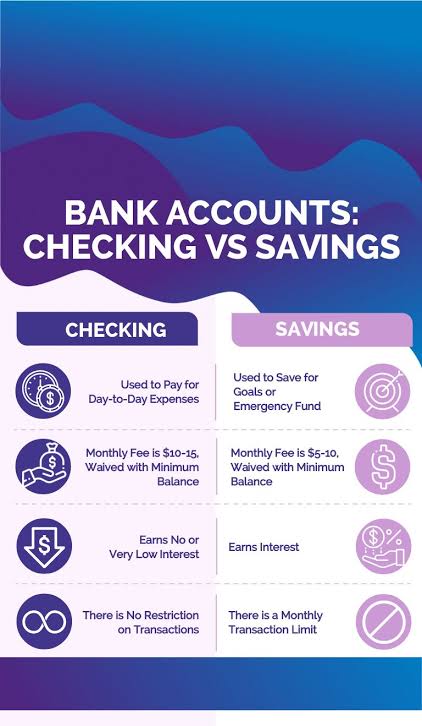
Access is the other big divide. Many savings accounts limit how often money can be withdrawn or transferred, and those rules can vary by country, bank, and account type. Checking accounts usually give easier access. Handy? Yes. But it can also make impulse spending easier.
For teens, I would think in terms of job-to-be-done. If the money needs to move, checking. If the money needs to wait, savings.
Checking Accounts for Teens: Who Should Actually Use This (and Who Shouldn’t)
Checking wins for teens who already have, or are about to have, routine spending. That includes a teen with a part-time job, a teen who pays for rides, meals, school supplies, team travel, or subscriptions, and a teen who needs a debit card more than a passbook-style place to save. Checking is also the cleaner choice if a parent wants a teen to practice budgeting with real transactions rather than with mental math.
The strength is not just convenience. It is feedback. A checking account shows spending in a way that feels immediate, which can help a teen connect each purchase with the remaining balance. That is useful training if the goal is to learn how money disappears in small pieces. I’d rather see that lesson happen in a checking account than through an overdraft or by draining a savings balance they meant to protect.
The weakness is equally clear: checking is too easy to drain. That same convenience can turn the account into a leak. If a teen has a hard time delaying purchases, checking can become a spend-first account with no real brake. Some checking accounts also carry fees or minimum-balance rules, and those can vary widely by bank and by country. A teen account that sounds simple may still come with costs tied to usage, paper statements, ATM use, or overdrafts. In the U.S., for example, the Consumer Financial Protection Bureau notes that overdraft and NSF fees can be significant, so account terms matter before opening one. CFPB
Who should skip checking? A teen who has no regular expenses, no direct deposit, and no plan for tracking spending may not need the extra moving parts yet. In that case, a savings account or a basic parent-managed setup can be less messy. I’d also pass on checking if the teen is likely to treat the debit card like free money. For that situation, a parent or bank representative should be consulted, because the account is fine; the behavior is the problem, and the account will not fix it.
Savings Accounts for Teens: The Specific Situations Where It Wins
Savings wins when the goal is to keep money from getting spent by accident or boredom. That makes it the better fit for birthday money, allowance the teen wants to preserve, emergency funds, or anything being saved toward a larger purchase. If the teen does not need to spend the money weekly, savings usually does the job better than checking.
The main strength is separation with purpose. A savings account helps create a gap between earning and using. That gap matters for teens because money habits are built from repetition, not lectures. When a teen has to transfer money out of savings before spending it, the pause creates friction. Useful friction. It slows impulse spending and gives the teen a moment to ask, “Do I really want this?”
Savings is also the better choice for money that should not be tied to a debit card. That includes money set aside for future school costs, travel, a first car, or a cushion for surprises. The account’s structure signals, “This is not everyday cash.”
The weakness is that savings can be awkward for active use. If a teen needs to pay for things often, the extra transfers can become annoying. Some savings accounts also limit how often withdrawals or transfers can happen, and those restrictions depend on the bank and local rules. In the U.S., federal rules historically limited certain convenient withdrawals from savings accounts, though that rule changed in 2020 and banks may still impose their own limits. Federal Reserve That is fine if the money is meant to sit there; it is a pain if the teen expects checking-account convenience.
Who should skip savings as the only account? A teen who gets paid and then spends from that same account during the week may need checking instead. Savings alone can make routine life clumsy. I wouldn’t use savings as a teen’s main spending account unless the account is acting more like a holding tank than a working wallet.
The Honest Side-by-Side
Here is the comparison that actually changes the decision.
| Criteria | Checking Account for Teens | Savings Account for Teens | Winner for [condition] |
|---|---|---|---|
| Daily spending access | Built for frequent payments, debit use, and cash access | Usually less convenient for daily purchases | Checking for everyday spending |
| Protecting money from impulse spending | Easier to spend quickly | Adds friction before spending | Savings for impulse control |
| Budgeting practice | Better for real-world spending habits | Better for setting money aside | Checking for budgeting with transactions |
| Short-term goals | Works, but money can disappear fast | Better because the balance is less tempting | Savings for a goal over weeks or months |
| Paycheck deposit | Often the better home for regular income | Less useful if money needs to move out often | Checking for part-time work income |
| Emergency fund use | Accessible, but easy to raid | Better if it is not meant to be touched | Savings for emergency reserves |
| Card and online payments | Usually more flexible | Often less practical | Checking for card-heavy use |
| Learning delayed gratification | Can be too easy to spend | Better teaching tool | Savings for habit-building |
| Fee and rule sensitivity | Can still have fees and overdraft issues | Can have withdrawal or transfer limits | Depends on the account terms |
The table points to the real split: checking is for motion, savings is for pause. Don’t overthink that part. The account type is doing behavioral work, not just holding cash.
How to Choose a Teen Account
The simplest way to choose is to match the account to the teen’s next 3 to 6 months of money use. When the teen will make 10 or more purchases a month, checking usually fits better. When the teen will mostly save and withdraw only a few times a year, savings usually fits better.
Start by listing the teen’s money sources and expenses. For example, a $300 monthly paycheck with $120 in regular spending points toward checking. A $200 birthday deposit meant for a $1,000 purchase points toward savings.
Then look at the account terms before opening anything. Fees, ATM access, transfer limits, and overdraft rules can matter more than the account label. A $0 monthly fee on paper can still cost money if the teen needs out-of-network cash access.
Finally, decide whether the teen needs one account or two. If the same $50 has to cover both snacks and future savings, separation may help. If the teen only needs one place for money to wait, savings can be enough.
Our Verdict: Which One to Choose and Why
Choose checking if the teen already has regular spending, uses a debit card, or gets paid and needs to move money in and out often. Choose savings if the main goal is to protect money from casual spending and keep it available for a future purpose. Neither if the teen is too young to handle either account responsibly without active adult oversight, or if the account terms are unclear enough that fees and limits would create confusion.
That is the clean answer, and I’d stick to it. When the teen’s money has a job today, checking is the better tool. When the money has a job later, savings is the better tool.
I’d also be honest about a common family mistake: opening only one account because it feels simpler. Simpler on paper is not always simpler in real life. A teen who uses one account for everything may blur spending and saving until neither has a clear purpose. That’s how money slips away without a plan.
For many teens, the best setup is not “which one instead of the other,” but “which one first.” Should there be only one account to open, I’d start from the teen’s actual use. A spender needs checking. A saver needs savings. When the teen does both, the better solution is usually to separate the jobs, not to force one account to behave like two.
Exception Scenarios: When the Verdict Flips
There are a few cases where the obvious choice is not the right one.
Since the teen has almost no spending needs but does have money coming in, savings can come before checking. That happens with gift money, occasional earnings, or a family that wants the teen to build the habit of setting money aside before introducing a debit card.
Second, when the teen is learning to manage a budget with frequent purchases, checking can be the safer educational tool even though it is easier to spend from. The point is not to make money hard to reach; it is to teach tracking, categorizing, and matching spending to income.
Third, when the teen is highly prone to impulse spending, I would avoid making checking the only place money lives. That does not mean checking is wrong. It means it should not be the whole system. Savings, with its extra friction, may be the better starting point.
Fourth, if local bank rules make one account type inconvenient or expensive, those terms matter more than theory. Rates, limits, fees, and age requirements differ by country and change over time. A bank’s actual account terms can outweigh the textbook difference between checking and savings.
What a Generic Article Misses About Teen Accounts
A weak article makes this sound like a debate about features. For teens, the real issue is habit design.
A checking account can teach money management, but it can also remove the pause that keeps a teen from spending too quickly. A savings account can protect money, but it can also become invisible money that never gets used for the thing it was saved for. Neither account solves discipline by itself. The account just nudges behavior.
That is why I do not like advice that says teens “should just open both” without context. Sometimes that is the right structure. Sometimes it is more account than the teen needs. The better question is: what problem is the account supposed to solve right now?
I would also warn parents and teens not to ignore account rules. Minimum balances, withdrawal limits, overdraft policies, debit-card controls, and parental access features can change how useful the account feels in practice. Those terms vary by bank and by region, so checking the current account agreement matters more than a glossy comparison page.
My bottom line is simple: pick the account that matches the teen’s actual money behavior, not the one that sounds more grown-up. Checking is the spending tool. Savings is the holding tool. Use the one that solves the right problem first.