What Is an Emergency Fund and Why Should Teens Have One?
Last updated: August 10, 2026
- A $25 school fee that shows up out of nowhere.
- Even a $25 or $50 surprise can derail a week when a teen’s budget is tight.
- Even $5 or $10 a week adds up over time.
- In this article, what is an emergency fund and why should teens have one?
A broken phone. A flat bike tire. A $25 school fee that shows up out of nowhere. This is where an emergency fund earns its keep.
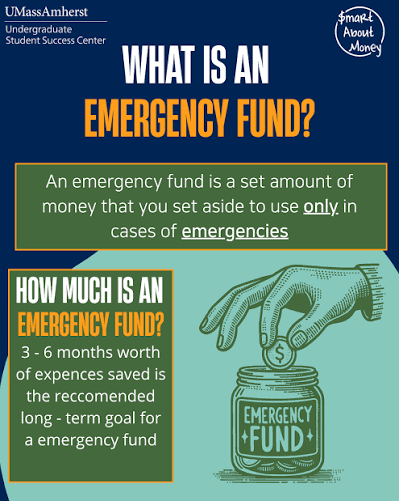
An emergency fund is money set aside for surprise expenses, so a teenager does not have to panic, borrow, or wipe out their cash for a normal goal when something goes wrong. In this article, what is an emergency fund and why should teens have one? The short answer is that teens should have one because the problems teens face are often small in dollar amount but big in stress: a broken phone, a last-minute school fee, a flat bike tire, a rideshare home after an unexpected change in plans, or a family situation that needs money right now. Even a $25 or $50 surprise can derail a week when a teen’s budget is tight.
What an emergency fund actually is
An emergency fund is not just “money I’m saving.” It is money with a job.
Its job is to handle expenses that are:
- unexpected
- necessary
- time-sensitive
A new pair of sneakers because the old ones are worn out is not an emergency. A replacement laptop charger the night before a big assignment might be. A concert ticket is a want. A parking fee because a parent’s car got towed is the kind of ugly surprise an emergency fund is for.
For teens, the fund does not need to be large to be useful. Honestly, I’d rather see a teen keep a small, reachable cushion than chase some perfect savings target and never start. A few hundred dollars can cover a lot of teen-sized problems. As a teen grows it beyond that, great. If not, a smaller fund is still a real tool.
There is one hard rule: money meant for emergencies should not get raided for every shiny impulse. Otherwise, it becomes a snack drawer. And that defeats the point.
Why teens need one sooner than they think
Adults with mortgages and insurance bills are usually the ones people picture when they hear the word “emergency.” But teens run into money trouble all the time, just in smaller doses.
Here is why that matters:
- Teen budgets are thin. Most teens do not have much room to absorb a surprise cost.
- Income can be irregular. Babysitting, lawn work, tutoring, food service, and part-time shifts can change from week to week.
- Access to credit is limited or risky. Without an emergency fund, the backup plan can become a parent, a friend, or a high-cost loan. That can create stress fast.
- Small emergencies can snowball. A missed bus means a rideshare. A broken charger means a replacement. A late fee turns into another fee. One small hit can wreck a whole month.
According to the Federal Reserve’s 2023 Survey of Household Economics and Decisionmaking, 63% of adults said they could cover a $400 unexpected expense with cash, savings, or a credit card paid off over time. That still leaves a large share who could not, and teens usually have less cushion than adults. I also think an emergency fund teaches a habit that lasts. A teen who learns to set aside cash for the unpredictable is learning how to handle money like life is real, not like every cost is optional.
This is one of those boring skills that pays off.
What counts as an emergency for a teen
People get fuzzy here, so I prefer to keep it plain.
A good teen emergency fund should cover things like:
- a cracked phone screen if the phone is needed for school, work, or safety
- a lost transit pass or unexpected fare home
- a school-required expense that cannot wait
- a medical co-pay or pharmacy cost, if a parent asks the teen to cover part of it
- a bike repair used for commuting to school or work
- a replacement for something essential, like a backpack or calculator, when there is no other option
What usually does not belong in the emergency fund:
- gifts
- fast food
- clothes for fun
- subscriptions
- last-minute social plans
- “I want it now” purchases
That boundary matters. If a fund gets used like a snack drawer, it stops being protection.
A good test I use in my own thinking is this: Would this cost still matter if I had zero mood attached to it? If the answer is yes, it may belong in the emergency bucket. If the answer is “I just really want it,” it probably does not.
How much a teen should save
I would not give every teen the same target, because teen life is not the same.
A student with a part-time job, a phone bill, and gas money needs a different cushion than a teen who gets a small allowance and has no regular expenses. The right amount depends on what the teen personally pays for and how quickly they need to replace it.
A practical way to think about it:
- Starter fund: enough to handle one small surprise
- Better cushion: enough to cover a few common teen expenses
- Stronger cushion: enough that one bad week does not wipe out savings
For a lot of teens, the starter fund is the right first goal. That might mean aiming for the cost of a phone repair, a few rides home, or one unplanned school expense. After that, the next step is building gradually.
I would not tell a teen to wait until they can save a “real” amount before starting. Small deposits matter because emergencies are often small at first. And a small fund is easier to protect.
Where to keep it so it still works when needed
An emergency fund should be easy to reach, but not so easy that it disappears the moment boredom hits.
For a teen, that usually means one of these:
- cash in a safe place at home for very small emergencies
- a savings account linked to a checking account, if the teen has one
- a separate envelope or jar, if banking access is limited and cash is practical
Each option has trade-offs.
Cash
– Pros: immediate, simple
– Cons: can be lost, stolen, or spent too casually
Savings account
– Pros: safer, separated from spending money, easier to track
– Cons: may take a little longer to access depending on the bank
Separate envelope or jar
– Pros: visible, easy to start
– Cons: not protected the way bank money is, and it can tempt impulse spending
If a teen is old enough to use a bank account, I usually prefer a separate savings account or a clearly separated bucket inside a teen-friendly banking setup. The key is separation. Money for emergencies should not sit next to money for pizza and games. When a teen compares options, a separate savings account is usually better than a checking account for emergency money because it is less tempting to spend. For related money basics, see How to Budget as a Teen and Best Savings Accounts for Teens.
One caution: if a parent is helping set up the account, everyone should be clear about who can access it and under what rules. That avoids arguments later.
How teens can build one without ruining the rest of life
The best emergency fund plan is the one a teen can keep doing.
I would start with three moves:
-
Pick one savings source.
That could be part of allowance, gift money, babysitting cash, job income, or money saved from not buying something right away. -
Set a small, repeatable amount.
The amount matters less than the habit. A teen who saves a little every week is building the muscle that keeps working later. -
Make the fund separate from goal money.
If a teen is saving for a game console, summer trip, or car, that money should not sit in the same pile as emergency cash. Mixed goals get messy fast.
A simple system can look like this:
- money comes in
- a small piece goes to emergencies
- another piece can go to short-term goals
- the rest is spending money
That split helps a teen avoid the common trap of thinking every dollar has to do everything. It does not.
One honest drawback: saving for emergencies can feel slow, especially if a teen has a low income. That is real. The answer is not to quit. The answer is to shrink the first goal and keep going. A fund that grows by tiny amounts is still a fund. If you want a more structured approach, teen budgeting tips can help the emergency fund fit into the rest of the plan.
Common mistakes I see teens make with emergency money
The biggest mistake is treating emergency money as invisible, and when a teen has debt, family financial stress, or repeated money emergencies, it is smart to consult a parent, guardian, school counselor, or qualified financial professional for advice.
That usually looks like one of these:
- keeping it all in one wallet with spending money
- saving for “emergencies” but never defining what that means
- emptying the fund for a non-emergency and promising to refill it later
- saving only in cash and then forgetting where it is
- setting the goal too high and giving up before the fund has any real use
Another mistake is waiting until something bad happens. The whole point is to prepare before the bad week.
I also think some teens overestimate what an emergency fund can solve. It is not there to fix every financial problem. If a teen’s income is too low to cover basics, an emergency fund helps with shocks but does not replace a bigger budget problem. In that case, the better next step may be talking with a parent, guardian, school counselor, or trusted adult about the bigger picture. If the money issue involves debt, rent, medical bills, or another serious family matter, professional financial advice can help. For more on that distinction, see when to ask a parent for money help.
A simple answer to the question: is it really worth it?
Yes. For teens, an emergency fund is worth it because it buys time, calm, and choice.
Without one, a surprise expense can become a crisis. With one, the teen can handle the problem, keep moving, and avoid borrowing from tomorrow to pay for today.
I would even say this: teens who keep emergency money are not just saving cash. They are learning that not every setback has to become a disaster. That lesson matters in school, at work, and later when the bills get bigger.
Quick answers teens ask most
How much should a teen put in an emergency fund first?
Start with an amount that feels realistic and can be repeated. The first goal is not perfection; it is building a cushion that can handle a small surprise. Even $5 or $10 a week adds up over time.
Should an emergency fund be in cash or a bank account?
Cash is simple and immediate. A savings account is safer and harder to spend accidentally. The better choice depends on the teen’s age, banking access, and how likely they are to dip into the money.
Can a teen use emergency money for a phone repair?
Yes, if the phone is truly needed for school, work, safety, or family contact. If the phone repair is just about convenience, it may not belong there.
What if the teen has very little income?
Then the fund can start very small. Even tiny deposits count. When saving feels impossible, the issue may be that the budget needs help, not that the teen is failing.
Is an emergency fund the same as general savings?
No. General savings can be for anything. Emergency savings should be reserved for surprise, necessary costs.
The bottom line
An emergency fund is money set aside for the things you did not plan for but still have to handle. Teens should have one because surprise costs hit them too, and those costs can cause real stress even when they are small. I would start small, keep the money separate, and use it only for true emergencies. That habit protects the teen now and teaches a skill that keeps paying off later.